Railora: a live train tracker for iOS
An iOS train tracker I built alone, on the App Store with several thousand users: SwiftUI, Live Activities, Cloudflare, 11 countries.
- Role
- Creator and developer · Railora
- Period
- May 2026 – present
- Place
- Remote
- Stack
- Swift, SwiftUI, Live Activities, Cloudflare Workers, Durable Objects, Turso, GTFS-RT, LangGraph
The context
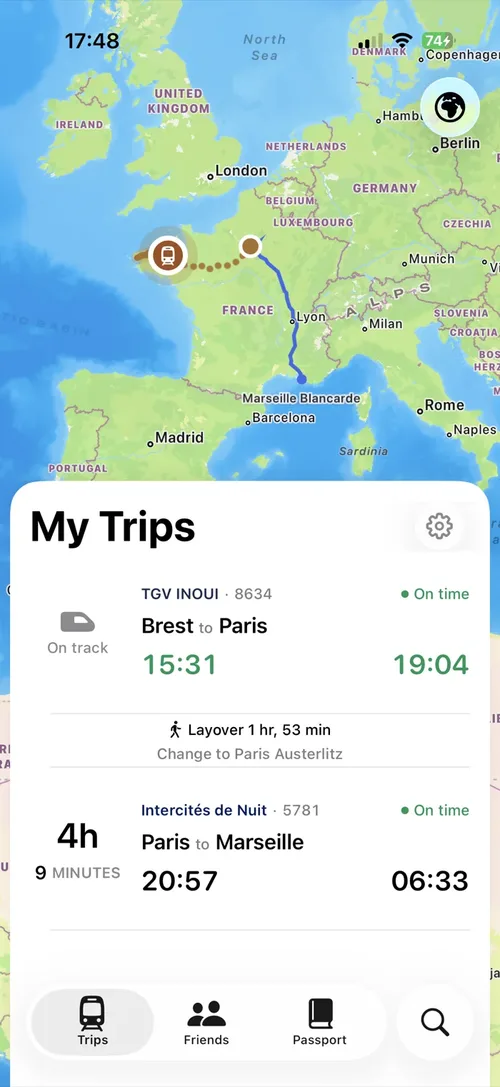
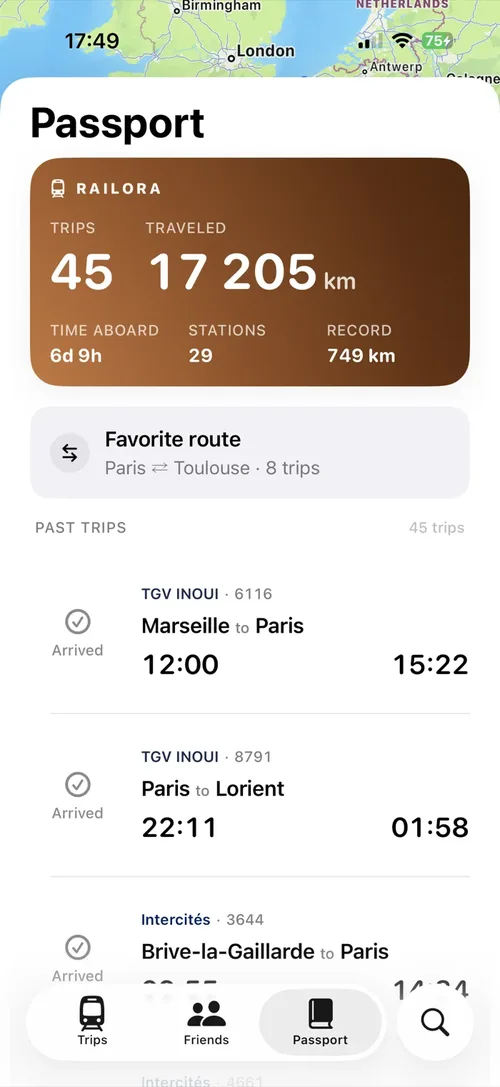
Railora is a consumer iOS app for live train tracking. I describe it as Flighty for trains.
The idea came from a long trip: I travelled through Thailand, Laos and Vietnam, then went home from Hanoi to Paris by train, through China, Central Asia, Georgia and Turkey.
On that journey, I wanted one place to follow my trains and their delays. Each country had its own operator, website and data, and no single app covered the whole route.
My role
I am the creator and the only developer of Railora. I built it alone, from the market study to production, which covers the product decisions, the iOS app, the backend, the data integrations and the release on the App Store.
What I built
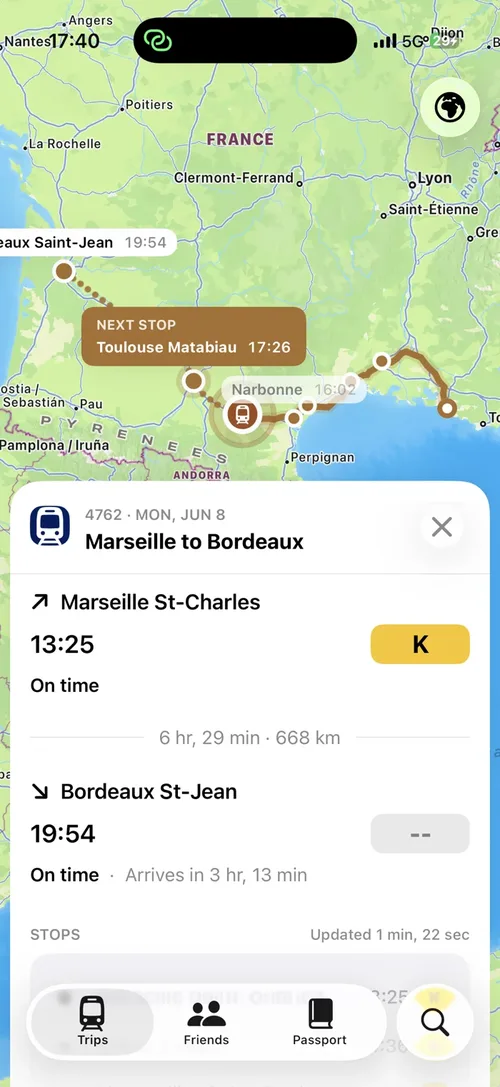
- An iOS app in SwiftUI, with Live Activities so a traveller can follow a train from the lock screen.
- Push notifications through APNs, including Live Activities started by a push.
- A serverless backend on Cloudflare Workers, written in TypeScript.
- Storage on Turso (libSQL), plus a Durable Object, KV and R2 for live state and caches.
- Collectors that ingest timetables and real-time feeds in the GTFS, GTFS-RT and SIRI formats, with one module per country because each network publishes its data in its own way.
- Nine alert detectors that watch a tracked train and notify the traveller.
- A delay status built with LangGraph, which decides how the app shows whether a train is late.
Results
- On the App Store, several thousand users.
- Timetables for 11 countries.
- Real-time data on 8 rail networks.
- 9 types of alerts.
What I learned
Rail data has no single standard: some networks publish real-time feeds, others only static timetables. That gap shapes the product, because the app has to be clear about what it knows live and what comes from a timetable.
A serverless backend kept the infrastructure small enough for one person to run. Cloudflare Workers, a Durable Object and a hosted database cover what a larger setup would need servers for.
Building alone forced me to make every trade-off myself and decide what to ship, what to cut and what to leave for later.
The trip itself was the best user research I could do. I was the user, on real trains, crossing real borders, with real delays.
I answer every message within 24 hours.
Next case study: GLS France: parcel tracking, Go services and AI tooling